Viska Medical helps clinical teams connect patient information with traceable scientific evidence to support informed decisions throughout the patient journey. Starting in hematologic oncology, stem-cell transplantation and cellular therapy.
Book a Demo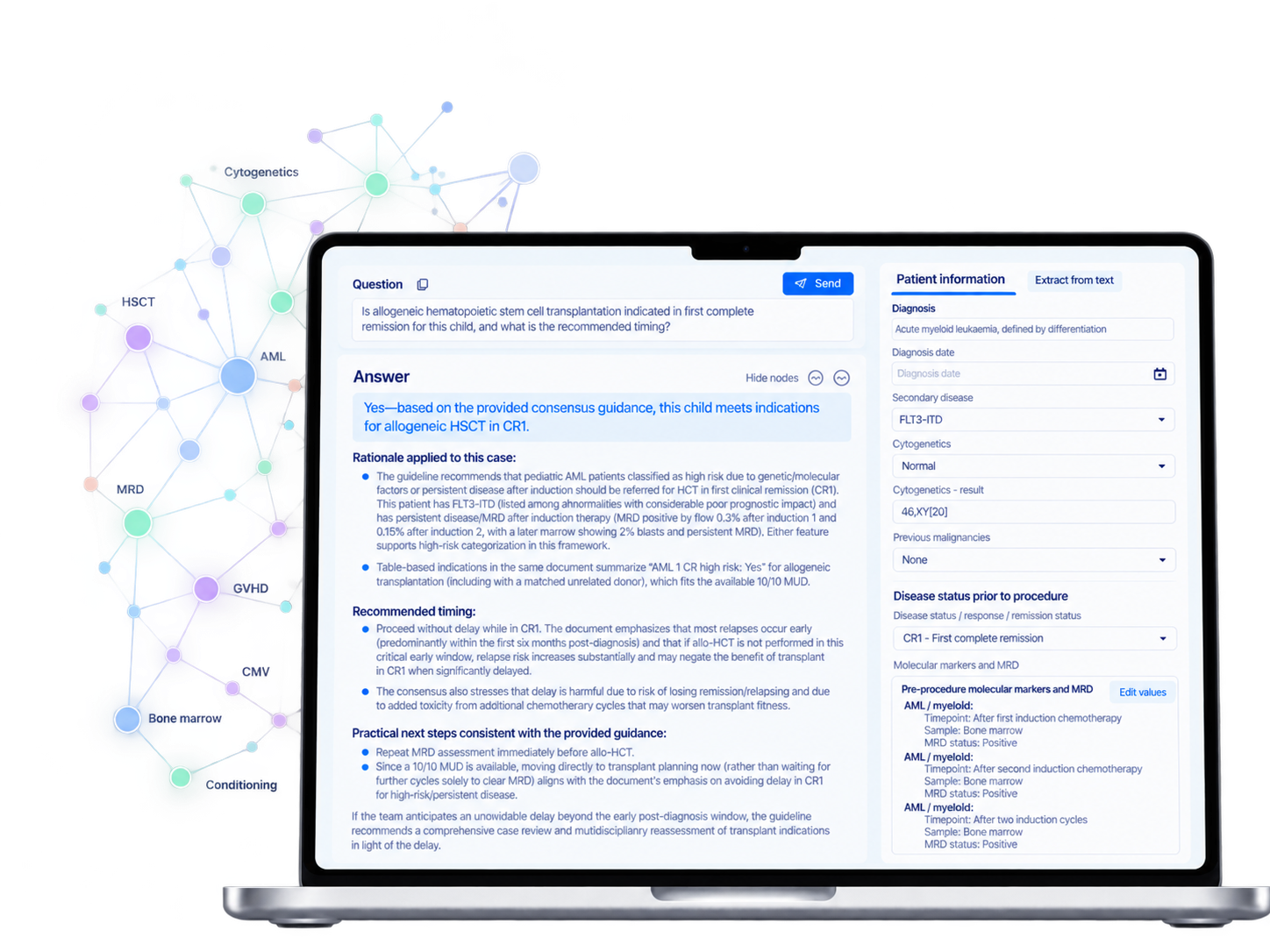
Bring diagnosis, molecular findings, treatment history and follow-up data into one structured clinical context.
Explore clinical questions using scientific publications, guidelines and referenced evidence connected to the individual patient case.
Support clinical case review across treatment stages, from initial evaluation and therapy planning to transplantation and follow-up.
77.9–95.2% evidence support
High clinical relevance
Developed and evaluated with transplant physicians at University Hospital Basel.
Our first clinical application for hematologic oncology, stem-cell transplantation and cellular therapy.
Presented at EBMT 2026 in Madrid, Spain.
Clinically Evaluated. Evidence-First by Design.
Viska SCTx connects clinical information, structured patient context and scientific evidence in a continuous clinical workflow.
As new patient information becomes available, clinicians can update the case and revisit clinical questions using the latest available context.

Capture patient history, clinical findings and new information through structured entry or text extraction.
Diagnosis · Laboratory results · Clinical updates

Organize patient information into a structured longitudinal record across diagnosis, treatment and follow-up.
Structured variables · Treatment history · MRD

Explore clinical questions in the context of the patient case, with evidence-linked answers and references.
Clinical questions · Guidelines · Scientific publications
Learn how Viska SCTx supports clinical case review, protects patient information and connects scientific evidence with individual patient contexts.

Our focus is on supporting better-informed decisions, better use of clinical time, and better care for more patients.
By connecting patient information, scientific evidence and clinical decision points throughout the care journey, Viska Medical aims to make clinical intelligence continuously useful, from individual case reviews to longitudinal insights,
real-world evidence and future research.
Connect patient-specific clinical information with relevant scientific evidence to support complex case reviews and clinical questions.
Bring scientific publications and clinical guidelines into patient-specific context, with references clinicians can review.
Support longitudinal case review across diagnosis, treatment, transplantation, cellular therapy and follow-up.
Make specialized medical knowledge easier to explore and apply across clinical teams and healthcare settings.
Support clinicians and multidisciplinary teams with structured patient information, shared workspaces and evidence-linked case reviews.
Our long-term vision is to connect clinical decisions, treatment choices and outcomes to enable institutional insights, quality improvement and research.
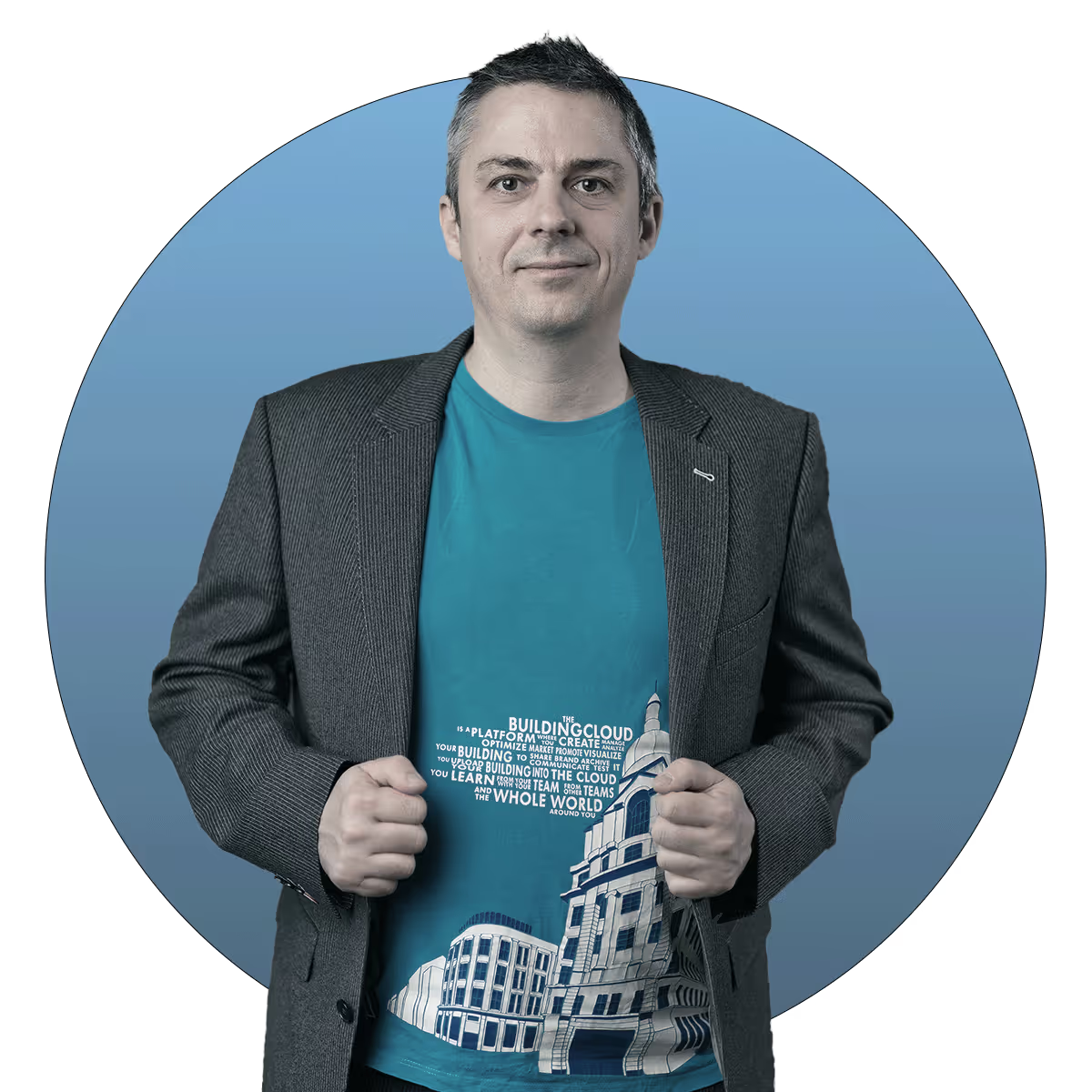
A graduate of Technische Universität Berlin (1994–2001), he relocated to Sweden in the early 2000s, founding his first company in 2002. Since then, Sven’s work has revolved around building intelligent platforms that leverage machine learning, semantic models, and digital twin technology to emulate human reasoning and drive more sustainable practices.
In 2011, he established Scharc Technology, where he continues to serve as CEO, focusing on BIM, digital twins, and AI-driven solutions that streamline project design and delivery in the real estate industry. By 2023, Sven had already ventured into medtech, spearheading the development of a medical AI Q&A prototype in collaboration with a physician at the University Hospital Basel. His commitment to integrating engineered experience feedback across diverse decision-making contexts is evident in his subsequent initiatives within the healthcare sector.
Beyond his entrepreneurial undertakings, Sven fosters the next generation of innovators and has been a Corporate Mentor at Stanford University and is a Mentor at AI Grid Germany. His track record exemplifies how the thoughtful application of advanced technologies can unite sustainable business models with forward-looking solutions that benefit both current and future generations.
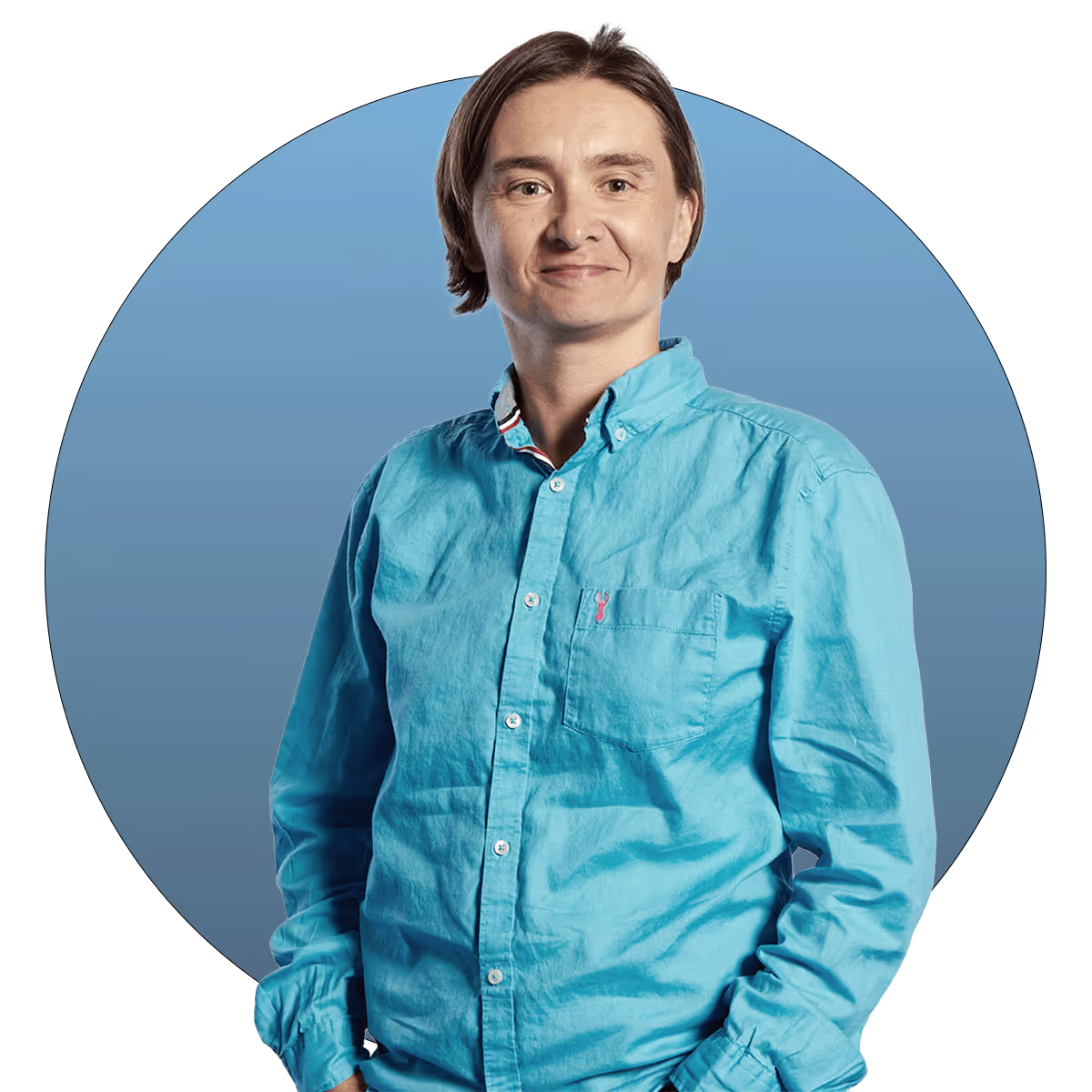
She has consistently pushed the boundaries of science and technology and as a former senior scientist specializing in X-ray crystallography and cryoEM, Jola successfully led cross-disciplinary projects that brought together protein scientists, computational chemists, and medicinal chemists to tackle complex challenges in drug discovery.
Her expertise encompasses molecular biology, protein purification, and biophysics, with over 25 scientific publications and multiple protein structure submissions to the Protein Data Bank. Since 2020, Jola has been instrumental in Evotec’s in silico R&D division, leveraging her deep structural biology knowledge to harness cutting-edge machine learning (ML) and artificial intelligence (AI) technologies for generative protein design. Her innovative work includes developing tools for Crystallization Drop Classification and integrating advanced models such as AlphaFold, ProteinMPNN, and RFDiffusion into drug discovery pipelines. Beyond her research contributions, Jola is passionate about fostering technological growth within teams.
She has spearheaded internal Python training programs, established a coding network for the Protein Sciences team, and designed Django + Angular web applications to streamline laboratory workflows. Her commitment to sustainability is equally noteworthy; as a Sustainability Champion for Evotec’s Abingdon site, she has driven initiatives focused on circular economy practices and climate neutrality. Additionally, she holds a Yellow Belt certification in Lean Six Sigma, demonstrating her dedication to operational excellence. Jola’s unique blend of scientific expertise, technological innovation, and leadership makes her a driving force in advancing modern solutions that bridge biology and computational science.

With his expertise and experience as a physician and researcher in experimental and transplantation immunology at Karolinska University Hospital, along with his work at Devyser developing highly sensitive and precise methods for mixed chimerism analysis, he plays a key role in Viska’s mission to develop clinical decision support for transplantation. He is the author or co-author of over 40 peer-reviewed publications and books. His medical expertise is crucial in shaping Viska AI’s new clinical decision support system.
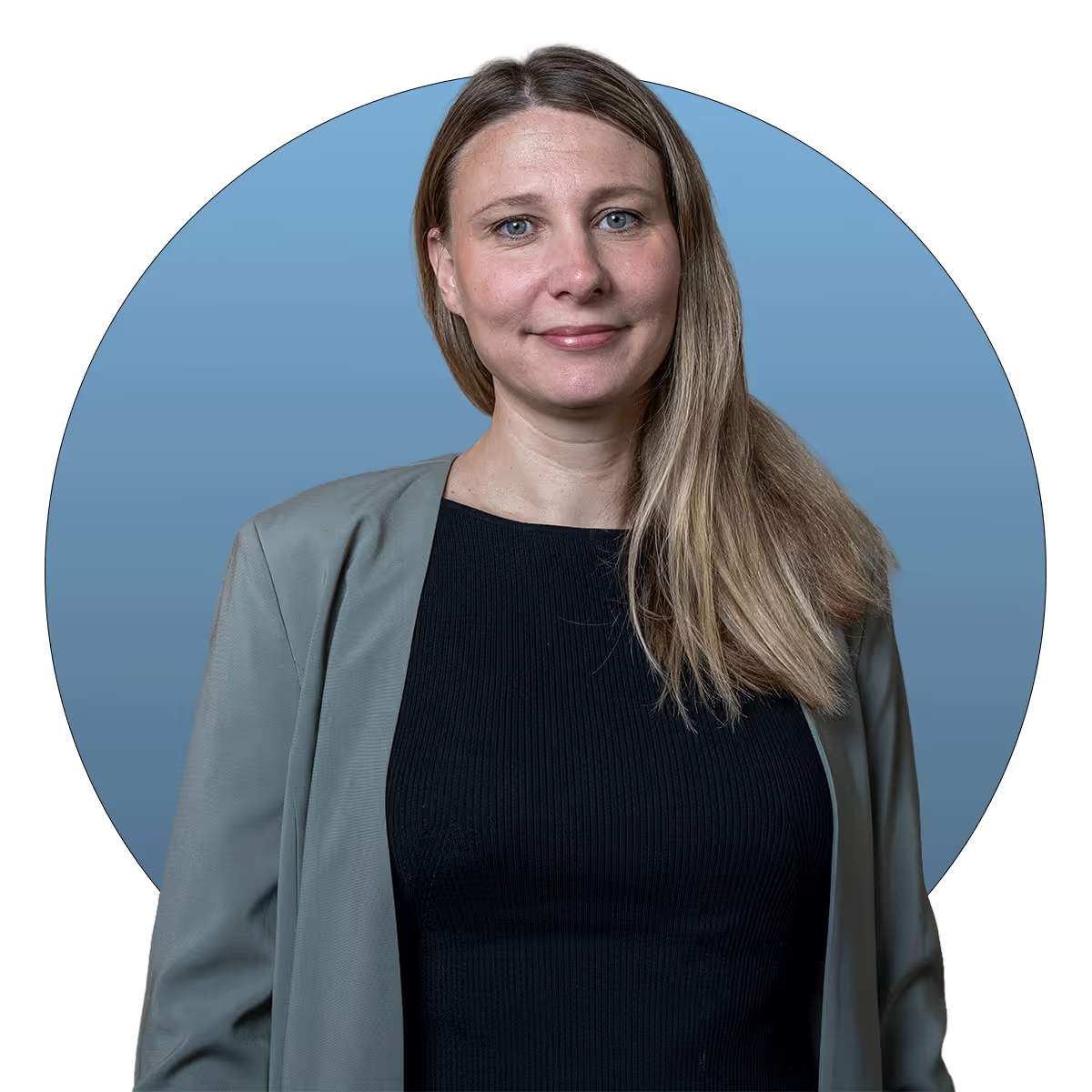
As a UX Designer and Design Manager, Julia has led the development of several medtech software products currently in use globally, meeting regulatory requirements and receiving positive user feedback. She is experienced in driving the full design process – from needs analysis to launch – including user research, personas, wireframes, prototypes, and interface design, always in close collaboration with cross-functional teams. Her goal has consistently been to deliver intuitive, user-friendly products that improve workflows and patient outcomes while meeting the needs of healthcare professionals, decision-makers, and regulatory bodies. Julia works in accordance with international usability standards for medtech, including IEC 62366 (for IVDR) and FDA guidelines for software, making her skillset highly relevant to Viska AI’s development of clinical decision support systems.
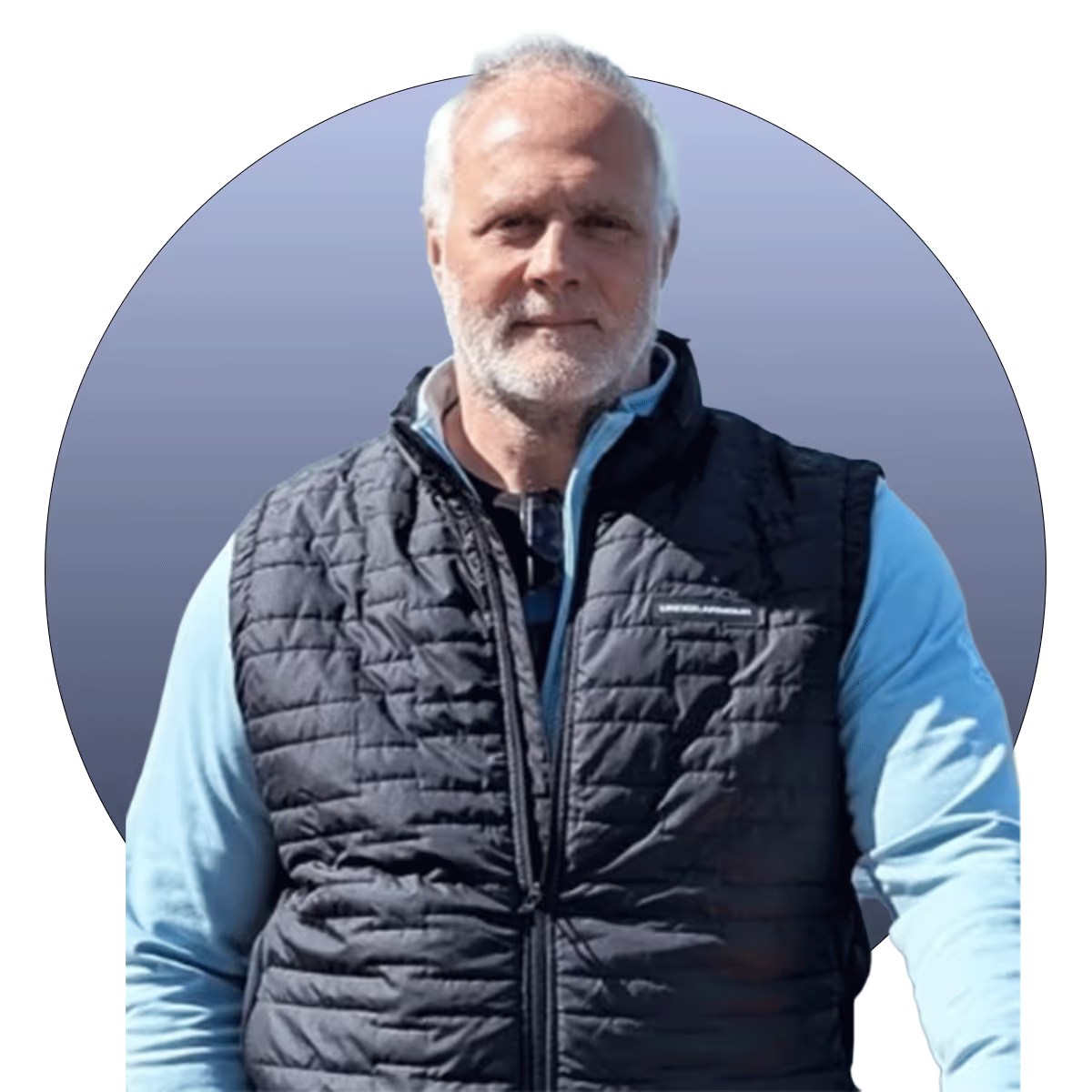
With over 20 years of solid experience in research, development, and project management in DNA and molecular diagnostics, he has led the successful development, production, and CE-marking of over 60 medical devices. Two of these, with annual sales exceeding EUR 50 million, were developed for Roche Molecular Systems – one of the global leaders in diagnostics. This expertise is instrumental in shaping and developing Viska’s new decision support system for post-transplantation care.
Dan Hauzenberger and Anders Hedrum collaborated for over 20 years at Devyser, which is now publicly listed on First North Stockholm. Devyser develops, manufactures, and sells genetic tests to laboratories worldwide. Their products are used in oncology, transplantation, and rare disease diagnostics, enabling personalized cancer treatment, genetic diagnostics, and monitoring of transplant patients. Together, they bring a complementary and highly relevant combination of expertise to the development of medtech solutions for healthcare.


